


Hip and Knee Pain Can Really Limit Movement – PT Can Help
Gain Back Your Range of Motion with Physical Therapy
Do you ever worry that your knees will “give out” while you’re standing? Do you struggle to sleep or get out of bed in the morning because of hip pain? If this is the case, know that you are not alone; hip and knee pain is extremely common!
Hip and knee pain can be debilitating, especially if you have both at the same time. You may believe that taking over-the-counter medications is the only way to relieve your pain. Not true! Physical therapy is a more effective option!
Whether you have hip pain, knee pain, or both, physical therapy can help you get to the bottom of your problem in a safe and comfortable way, without the need for drugs or invasive surgery. Schedule an appointment with Orthopedic Sports Therapy today to get back to a healthy, active lifestyle!
How can a physical therapist help relieve my hip/knee pain?
You don’t have to let hip and knee pain hold you back; physical therapy can help. At Orthopedic Sports Therapy, our physical therapy treatments can help to alleviate (and even eliminate) hip and knee pain. This could save you from having to undergo expensive and painful surgery.
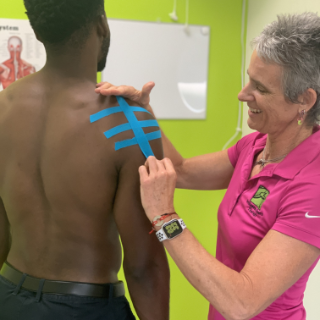
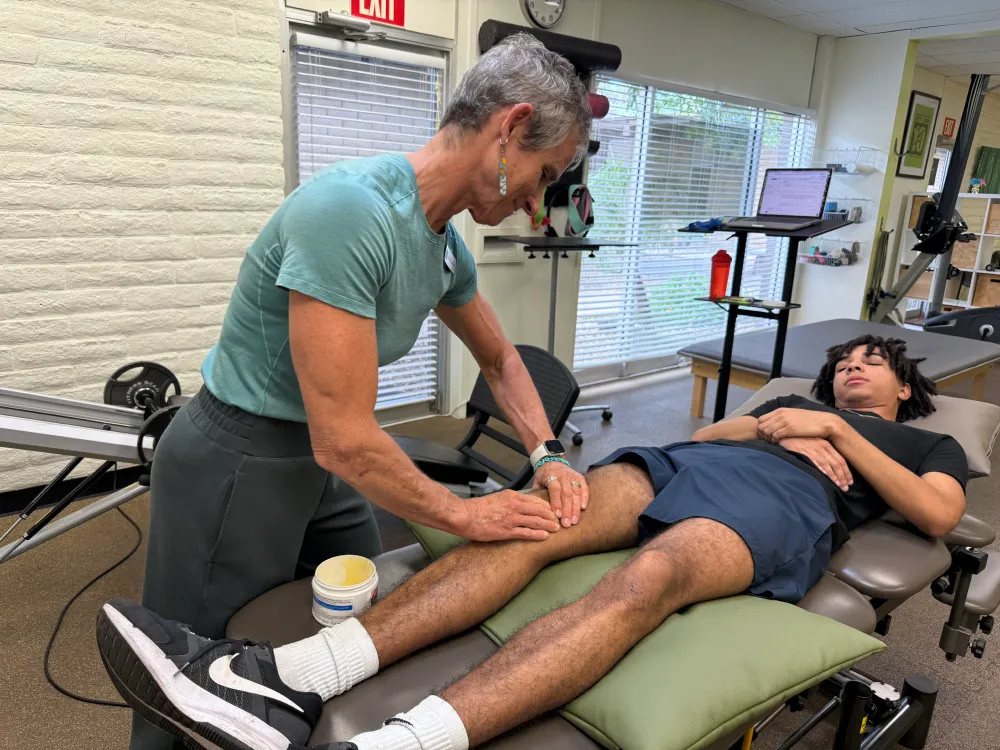
At your first appointment, one of our physical therapist in Ahwatukee, Biltmore or Tempe, AZ will examine your hip and/or knee for signs of misalignment or structural damage, as well as your stance, posture, gait, and range of motion. They will also perform clinical tests to determine if other joints, such as your feet and ankles or low back, are contributing to your problem
Following your physical exam, your physical therapist will recommend a physical therapy plan to improve your overall joint function so that you can return to your regular life.
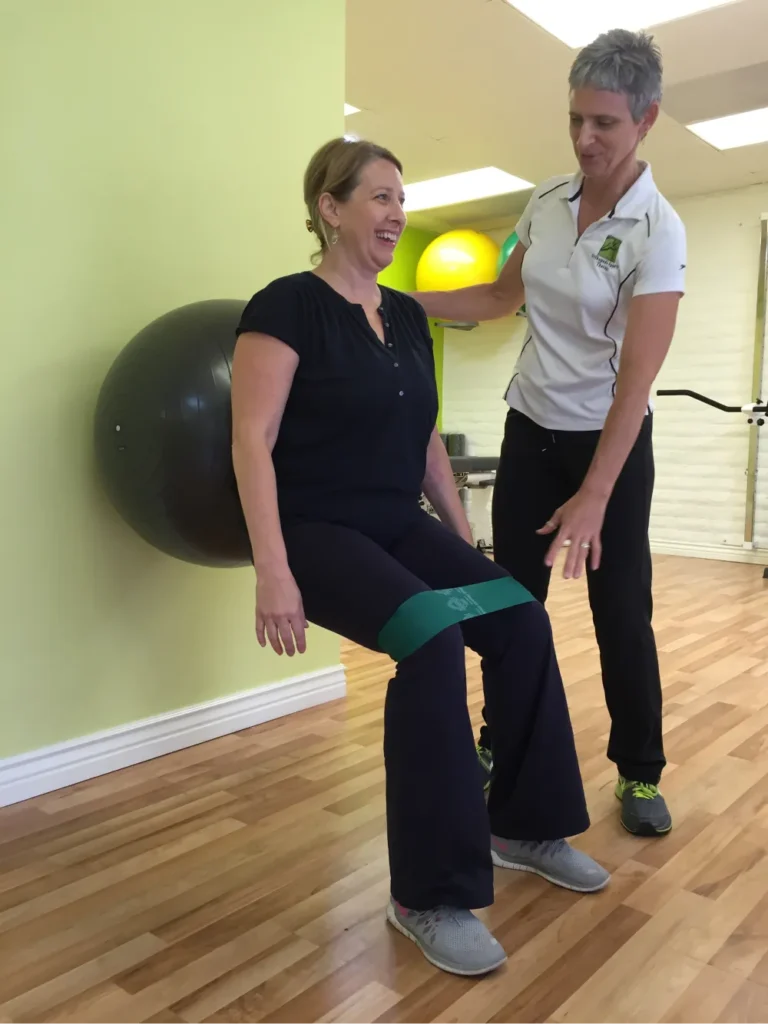
Specific exercises will be given to you to help relieve joint pain and stabilize your weak hip and/or knee. Exercises will vary depending on your condition; for example, those living with kneecap pain usually respond better to exercises that target both the hips and the knees, rather than just the knees.
Core strengthening exercises may also be prescribed to help strengthen your back muscles, lower abdominal muscles, and pelvic muscles. Core exercises are designed to improve your posture, as well as balance your weight on both sides of your body.
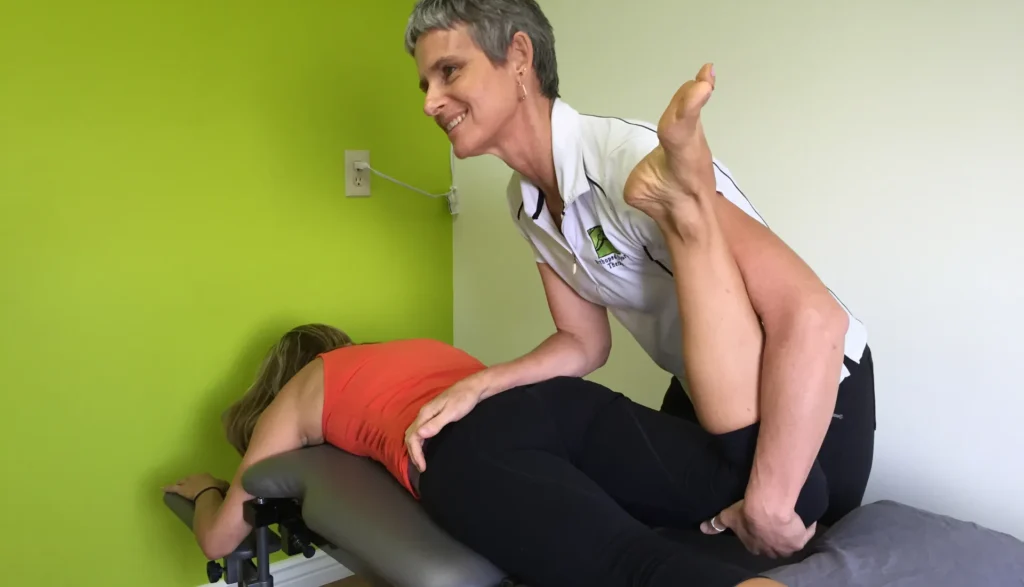
As your physical therapist sees fit, additional specialized hands on treatments (such as mobilizations to improve joint movement or other soft tissue treatments that relieve pain and promote healing of damaged hip and/or knee tissue) may be added to your recovery plan.
What’s causing my hip/knee pain?
Hip and knee pain can be caused by a variety of factors.
Because many nerves run through both areas, a pinched nerve can cause hip and knee pain. An unbalanced posture or gait can lead to abnormal stress and premature wear and tear in your hips and knees, resulting in painful arthritis symptoms.
Overuse injuries such as tendinitis and chronic muscle strain are common because both the hips and knees are constantly in use. Acute injuries such as sprains, strains, and dislocations can also affect these joints.
Some painful conditions may affect only one or both joints. Hip cartilage injuries, known as labral tears, are associated with hip pain, whereas bursa sac inflammation, known as bursitis, may be associated with both hip and knee pain.
Injuries that cause hip instability can also affect the knees. Hip flexor muscles that are too tight and gluteus medius muscles that are too weak can cause the hip to rotate inward, unintentionally. This can cause painful conditions such as patellofemoral stress syndrome, pain at the iliotibial band, pinching at the hip, as well as general added stress on the knee or kneecap.
Seeing a licensed physical therapist in Ahwatukee, Biltmore or Tempe, AZ for a thorough evaluation of your condition is the best way to determine the true cause of your hip or knee pain.
How are hip and knee pain related?
When we’re in pain and go to the doctor to find out what’s wrong, we’re often surprised to learn that the problem isn’t what we may have thought. This is due to the fact that all of our body parts are interconnected and collaborate to keep us alive. If your knee hurts, chances are your hip will as well, and vice versa!
Pain in the hips and/or knees can be caused by the joints themselves or by a problem in another part of the body. For example, low back pain can “refer” pain or tightness to the hip or knee, meaning that the source of the pain is not where the pain is felt.
Your hip is a ball-and-socket joint that supports the weight of your upper body by relying on a variety of muscles and tissues to keep it mobile and stable so it can function properly.
Your knee is a hinge joint with only forward and backward movement. Squatting requires your knees to support six times your body weight more than your hips. Proper hip and knee movement enables you to perform complex movements like standing, walking, running, and dancing without collapsing.
The hips and knees are connected by the same kinetic chain, which means they are a group of weight-bearing joints that must work together for the body to function properly.
As a result, problems with the knees can lead to problems with the hips, and vice versa. If one part of the kinetic chain is out of balance, stress and deterioration may be placed on another part of the chain. Everything is intertwined!
Find long-lasting relief with Orthopedic Sports Therapy
It’s time to stand up to your hip and knee pain – get started on the path toward long-term pain relief today!
Sources:
- https://www.arthritis.org/about-arthritis/types/osteoarthritis/
- https://www.health.harvard.edu/healthbeat/exercise-for-stronger-knees-and-hips
- https://www.moveforwardpt.com/SymptomsConditionsDetail.aspx?cid=089d992a-4c46-4fe0-9fbd-52069837345a
- https://www.moveforwardpt.com/SymptomsConditionsDetail.aspx?cid=f6dfe597-2f7d-4f1e-9aff-67694dca085f